
Is AEO a Scam? Then & Now
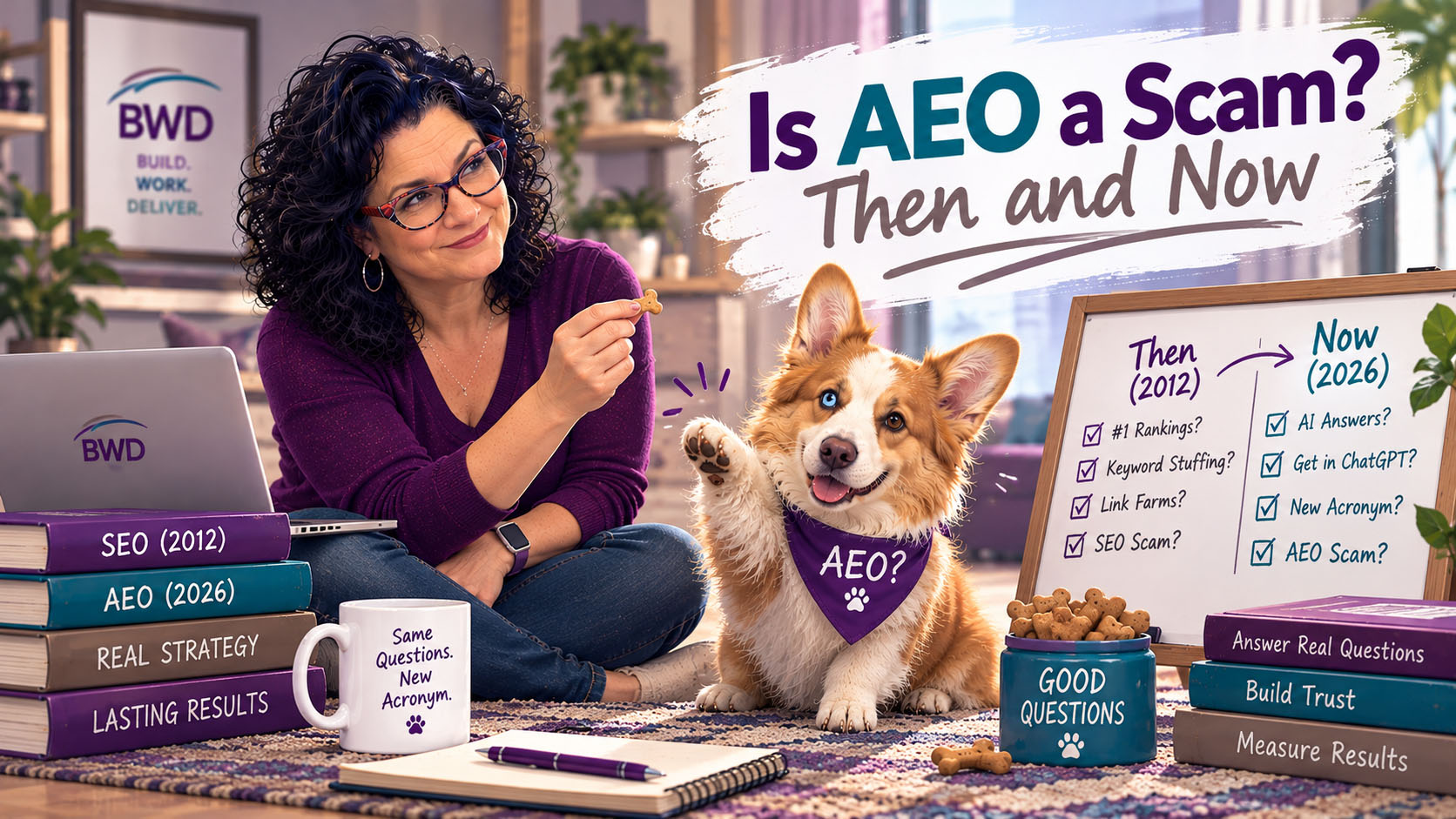
Same question, new acronym
In September 2012, I wrote a post called Is SEO a Scam? Apparently, a section of the population had decided it was.
Fourteen years later, I’m hearing the exact same question. Only now it’s about AEO.
“Is AEO real, or is it just SEO with a new coat of paint?” “Someone’s offering to get us into ChatGPT. Is that a thing?” “Do we need an AEO agency now, too?”
My answer hasn’t changed much. It depends on who’s doing it and what they’re promising.
What I said in 2012
Back then, the complaint went like this. A business paid someone to “do SEO.” They didn’t land at the top of Google. So SEO must be a scam.
I argued the problem wasn’t SEO. It was the expectation. Nobody could guarantee you the top spot, and chasing a single term was the wrong goal anyway.
The approach I laid out had four parts:
- Get as many pages indexed as possible. A net catches more than a single fishing line.
- Rank for many terms, not one. You can’t read a buyer’s mind, so cover the questions they might ask.
- Earn the click. Put the answer at the top of the page so visitors don’t bounce back to the results.
- Convert. One line from that post still holds up: one million visits do not automatically give you a million sales.
I ended by saying search engines are constantly evolving. That turned out to be the understatement of the decade.
What the pitch sounds like now
In 2012, the bad pitch was “We’ll get you to #1 on Google.” In 2026, it’s “We’ll get you recommended by ChatGPT.”
Same promise. New logo on the slide.
Here’s what makes it tricky: AEO isn’t fake. Buyers really are asking AI tools who to hire, what things cost, and which vendor fits. If you show up in those answers, that matters. I covered what actually moves the needle in SEO Then and Now, so I won’t repeat the whole list here.
The scam isn’t the channel. It’s the guarantee.
Nobody controls what an AI model says. Answers change by the day, by the wording of the question, and by the person asking. A vendor who guarantees placement is selling the same thing the “#1 on Google” crowd sold in 2012. It wasn’t true then, either.
Marketers ruin everything
Gary Vaynerchuk has a line he’s repeated for years: “Marketers ruin everything.”
He means that every time a channel works, marketers flood it until it doesn’t. Email. Banner ads. Facebook organic reach. Every one of them followed the same arc.
SEO followed it too. Keyword stuffing, link farms, scraped content. Those tactics are what gave SEO its scam reputation in the first place. The channel wasn’t the problem. The shortcuts were.
AEO is early in that same arc. I’m already seeing pages written for machines instead of people, mass-produced FAQ content, and “get cited by AI” packages with monthly retainers. Some of it will work for a minute. Then it won’t.
Fun fact: Gary keynoted INBOUND in 2012, the same year I wrote the original post. His line that year was “Care immensely or die!” That advice aged better than most of what was being sold as SEO at the time.
They ask, you answer
If Gary describes the problem, Marcus Sheridan describes the fix. His whole philosophy fits in four words: “They ask, you answer.”
Sheridan built River Pools into the most-trafficked pool website in the world by answering the questions buyers actually asked. What does a fiberglass pool cost? What are the problems with them? Who else should I consider? No tricks. Just honest answers, published where people could find them.
He’s been clear that AI raises the stakes on this. In a recent interview he put it bluntly: “If you’re not recommended by AI, you could be in big trouble.”
But look at how he says you get there. Not with hacks. With trust, built one answered question at a time. He’s also said that if your brand is built around trust, it doesn’t matter what happens with AI.
That’s the same answer I gave in 2012, just better said. Have the answer at the top of the page. Cover the questions buyers really ask. Make it easy to take the next step.
How to tell strategy from scam
If someone pitches you AEO, here’s how I’d sort it. Most of these red flags are the same ones from 2012.
| Red flag | What real strategy sounds like |
|---|---|
| “We guarantee you’ll be recommended by ChatGPT.” | “We’ll improve the odds and show you how we’re tracking it.” |
| One magic tactic (a special file, a schema trick, a secret prompt) | Fundamentals: clear answers, real expertise, consistent topics, structured pages |
| Reports on mentions and visibility only | Reports that connect AI visibility to leads, deals, and revenue |
| Content written for machines | Content written for buyers, structured so machines can read it |
| Can’t explain what changed if results drop | Explains that answers shift and adjusts the plan |
That third row is where I spend most of my time. Visibility you can’t tie to revenue is just a nicer-looking vanity metric.
If you’re on HubSpot, you can check this yourself:
- Watch for AI tools showing up as referral sources in your traffic reports.
- Add a “How did you hear about us?” field to your forms. Buyers will tell you when ChatGPT sent them.
- Follow those contacts through to deals. A million AI mentions don’t automatically give you a million sales, either.
So, is AEO a scam?
No. But some of what’s being sold as AEO is.
In 2012, the businesses that won at search weren’t the ones who bought rankings. They were the ones who answered their customers’ questions better than anyone else. The same is true now. The machine reading your content changed. What it’s looking for didn’t.
Answer the question. Prove you know what you’re talking about. Make it easy to take the next step. Then measure what actually turns into revenue.
Not sure whether your HubSpot setup can tell you where your leads are really coming from, AI included? That’s something I look at as part of a portal review. Let’s talk.
Teajai “TJ” Kimsey has been in digital marketing for 25+ years. She’s been advising clients on how to gain visibility in search engines for just as long. With Upwork Top Rated Plus status (top 3% worldwide), TJ works directly with every client — no account handoffs, no junior staff. View her portfolio or get in touch to talk through where AI actually belongs in your digital marketing plan.
Does your team actually know the difference, and does your setup match how deals really get worked?
Common Questions About AEO
Is AEO different from SEO?
SEO aims to rank in traditional search results. AEO aims to be the source AI tools cite when they answer a question. The fundamentals overlap heavily: clear answers, real expertise, and well-structured pages.
Can anyone guarantee my business will be recommended by ChatGPT?
No. AI answers vary by question wording, user, and timing, and no vendor controls them. Treat any guarantee as a red flag.
How do I know if AI tools are sending me leads?
Check your traffic reports for AI referral sources, and add a “How did you hear about us?” field to your forms. Then follow those contacts through to closed deals.
Do I need a separate AEO agency?
Usually not. If your content already answers buyer questions clearly and your site is well structured, you’re doing most of what AEO requires.
Get in Touch