
Reverse Engineering
While more companies are discovering the marketing strengths of the internet . . .
company managers often approach the project of web design and development from the top down. In other words, the design comes first and the goals are not considered until the project is complete.
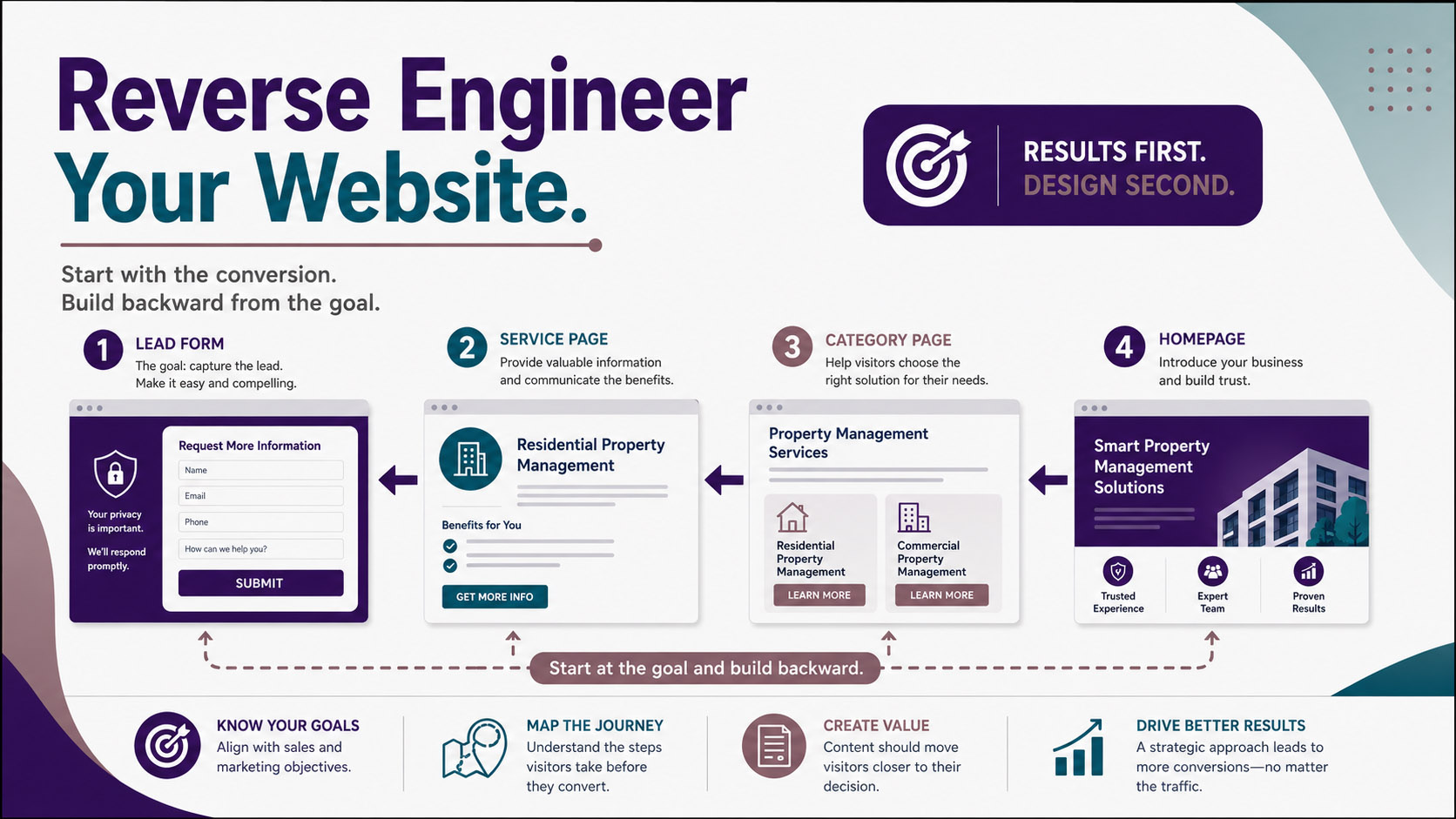
To be a strong competitor on the internet you must do a bit of reverse engineering. Try thinking from the bottom up – results first.
The first step in any effective web presence is a meeting with the sales and marketing staff to determine what the site should do for the company. Do you want to generate more leads? More direct sales? Cultivate customer feedback or collect prospect information? Each of these goals is important to the development process.
Since B2B online is growing, (and most B2B interaction is lead generation) let’s start with the idea of generating leads.
If your company wants to generate 100 new leads each month you know that you need a page on the website to collect and transfer those leads.
Generally, these are collected via a contact form. Most of the time a contact form is on the actual contact page, but is this the best place?
If you are a site that is promoting property management services the logical place for a lead-generating form is on the actual page where property management-related information is listed. If you are generating leads for air conditioning service then the form should be a part of the air conditioning page. But if you just want to give your customers the opportunity to submit feedback and questions via email, then having a form on the contact page makes sense.
Now think about the page where the form will be located. What type of information needs to be on that page to compel your visitor to complete the form?
The message on this page is just as important as any other page of the site. Be sure to focus on the benefits of your service and give a good reason to complete the form. Assure your visitor of their privacy and that you will respond to their request promptly.
Going further back now, what page will your visitor most likely visit before coming to the lead generation page?
If it is a small site they will most likely visit the home page and click on the link that relates to their search. In this case, that page should contain the contact form. If the site is larger there may be a couple of steps in between.
For example, if the site goal is to generate leads in several different areas like residential property management and commercial property management, the visitor might go to a general page about property management then decide which category best fits their situation and click on the link to that specific page.
In a smaller site the home page would direct the visitor to the page with more information and the contact form would be on that information page. But in the larger site there may be 2 (or more) pages preceding the page with the contact form: the home page, which introduces the site and services; and the service page, which gives an overview and the different specific options.
As you think through what you want the visitors to do on the site, think about the text that each page must contain to bring the visitor further along in the process. Start with the point at which the visitor makes the decision to interact then build from that point.
By taking a different approach to the way your company website is developed (or redeveloped) you will find a higher rate of conversions, no matter how much traffic your site generates.
Teajai Kimsey has been building on the internet since before most businesses knew they needed to be there. Starting in web development in 2000, she’s evolved alongside every major shift the industry has taken — from websites to email marketing to social media. A regional speaker and contributing writer on digital topics for local news, she translates what’s happening online into practical strategies small and mid-size businesses can actually use.