
How Do You Know If Your HubSpot Is Actually Working?
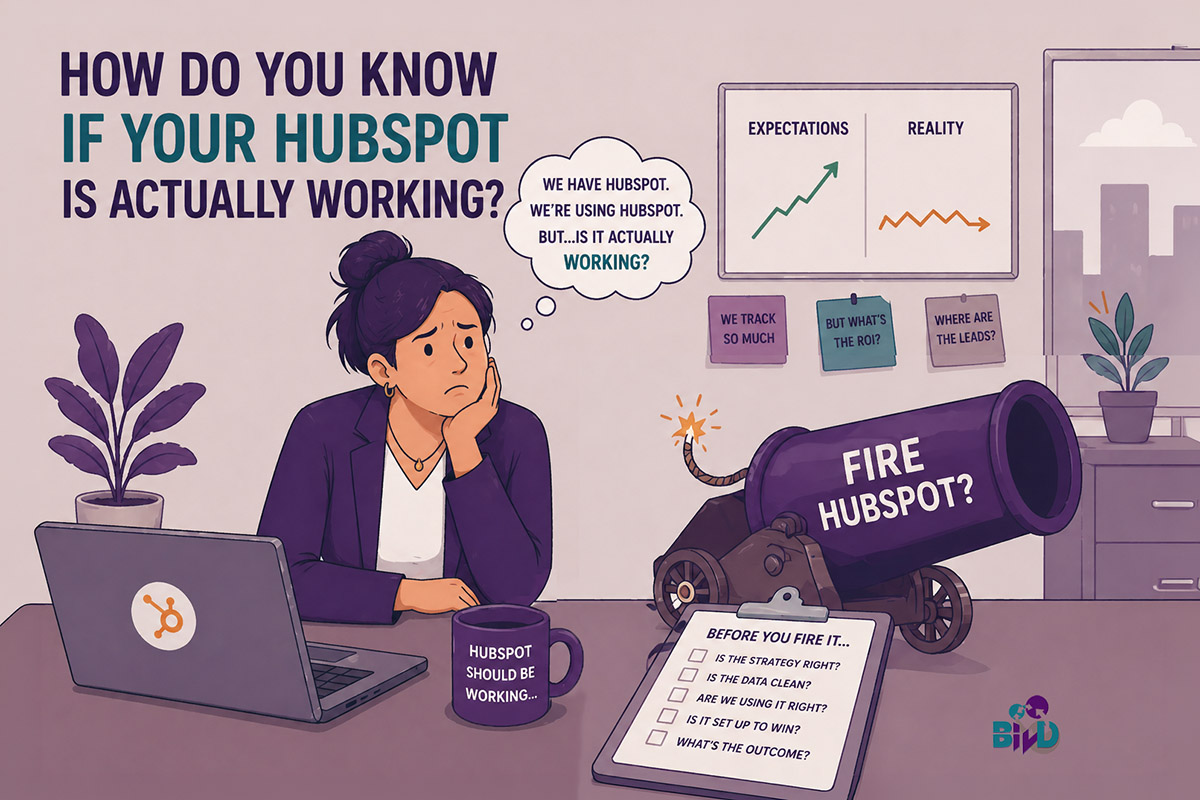
I audit HubSpot portals for a living. Here’s what I find — almost every time.
How do I know if my HubSpot portal is optimized?
Most people can’t answer that question.
Not because they haven’t been paying attention — but because HubSpot is one of those tools that looks like it’s working even when it isn’t. Contacts are in there. Deals are moving. Emails are going out. The dashboard has numbers on it. Everything appears fine.
But “active” and “optimized” are not the same thing.
I audit HubSpot portals for a living. Here’s what I find — almost every time.
The Signs Your Portal Has Drifted
- Your pipeline doesn’t reflect reality.
There are deals sitting in stages they should have left months ago. No close date. No activity. Sometimes no owner. The numbers look promising until someone asks a follow-up question — and then the whole thing gets walked back in the meeting. That’s not a sales problem. That’s a structure problem. - Your team is doing manually what HubSpot should be doing automatically.
Someone is sending follow-up emails by hand. Someone is updating lifecycle stages one contact at a time. Someone is pulling a report every Friday that HubSpot could generate itself. When I see this, it usually means the automations were never built — or they were built and then stopped working, and no one noticed. - You can’t explain what the reports are actually measuring.
This is the most common one. A leader gets a report, nods along, and privately isn’t sure whether the numbers are correct or what snapshot they’re looking at. The report exists. It just doesn’t tell a clear story — because the underlying data was never structured to tell one. - Contacts are in there that have no business being in there.
Duplicates. Old leads from three years ago still marked as “New.” Contacts with no company association. Records where the lifecycle stage hasn’t moved in 18 months. Every one of these is noise — and noise makes your reporting less trustworthy and your automation less precise. - Nobody really knows who’s in charge of HubSpot.
It started with one person setting it up. That person may or may not still be at the company. Other people have made changes along the way — a workflow here, a new property there — without a clear picture of how everything connects. The result is a system that technically works, just not the way anyone intended.
What an Optimized Portal Actually Looks Like
Clean data. Automations that run without babysitting. Reports that leaders look at and immediately understand. Lifecycle stages that reflect where contacts actually are, not where they were when someone imported them. A pipeline that mirrors how deals actually move — not how your sales process was documented in 2021.
It’s not complicated to describe. It takes real work to build
What to Try
Start with three questions:
Can someone on your team explain exactly what attribution model your reports are using — and what snapshot in time they’re capturing?
Are your lifecycle stages updating automatically, or is someone doing it by hand?
Do you have deals in your pipeline with no activity in the last 60 days?
If any of those feel uncomfortable to answer, that’s your signal.
A HubSpot portal audit doesn’t have to be a big project. It’s a structured look at what’s working, what isn’t, and what one or two changes would make the biggest difference.
If you’d like a second set of eyes on yours, let’s talk.